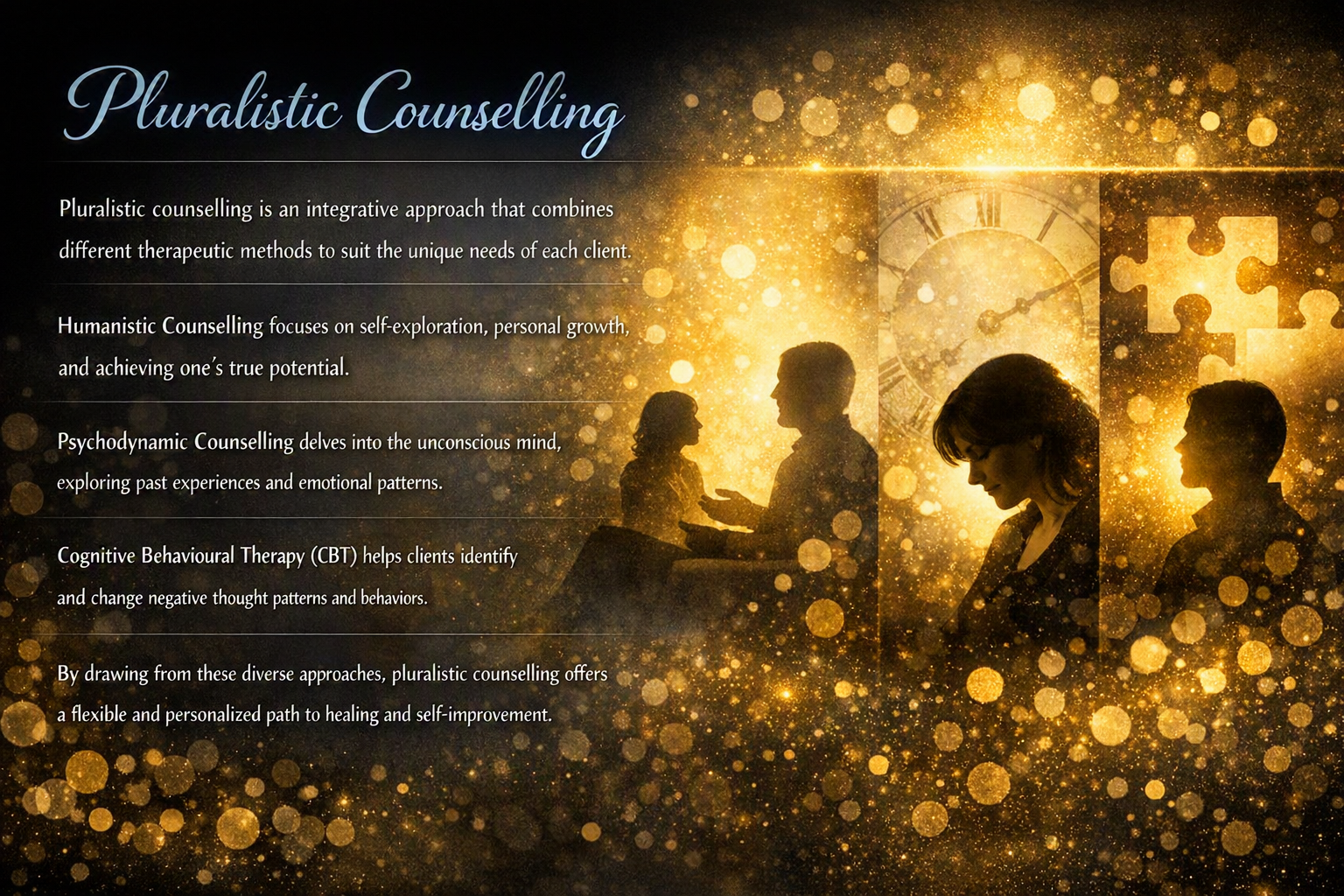
Pluralistic counselling provided using CBT - Cognitive Behaviour therapy, Psychodynamic Counselling and Humanistic counselling sometimes framed as personal centred counselling.
Cognitive behavioural therapy (CBT)
CBT aims to help you change the way you think (cognitive) and what you do (behaviour). Rather than looking at past causes, it focuses on current problems and practical solutions to help you feel better now.
The way we think about situations affects the way we feel and behave. If we view a situation negatively, we may experience negative emotions and feelings which lead us to behave in an unhelpful way. Your therapist will help you identify and challenge any negative thinking so you can deal with situations better and behave in a more positive way
CBT can be helpful for depression, anxiety, stress, phobias, obsessions, eating disorders and managing long term conditions.
Humanistic therapy / Person centred therapy
This approach focuses on the individual as a whole. It encourages people to think about their feelings and take responsibility for their thoughts and actions. The emphasis is on self-development and achieving your highest potential rather than on problematic behaviour. Gestalt therapy, person-centred therapy, transactional analysis and transpersonal therapy are all humanistic approaches.
Person or client-centred therapy is based on the view that everyone has the capacity and desire for personal growth and change, given the right conditions. Rather than being seen as the expert and directing the therapy, the counsellor offers unconditional positive regard, empathy and congruence to help you come to terms with any negative feelings and to change and develop in your own way.
Psychodynamic counselling
developed form psychoanalysis. It focuses on the unconscious mind and past experiences and explores their influence on current behaviour. You will be encouraged to talk about childhood relationships with parents and other significant people. As part of therapy, you may transfer and pass on deep feelings about yourself, parents and others to the therapist. Although psychodynamic counselling can be practised in a short series of sessions, it is more usual for it to be a relatively lengthy process. It is likely to appeal to people who are interested in exploring their own unconscious processes and who can accept that the changes they are seeking may take time to achieve.